Guest writer Tom Nguyen explores queer identity and health through the lens of his migration from Vietnam to Australia.
Hi, I’m Tom from Vietnam. I’m 30 years old and have lived in Australia for three years now. This new chapter has been about more than just migration; it’s been about finding comfort in my identity and learning how to take care of my health without fear.
Health services in Vietnam
I was a closeted gay man in Vietnam, living in Hanoi for 10 years, before moving here. Back then, I didn’t really learn about or connect with LGBT health support or organisations. I wasn’t aware of services that offered free or low-cost HIV and STI tests.
I went to mainstream sexual health clinics a few times, but the male doctors assumed I was straight, asking about my marriage status or girlfriends. If I asked for an HIV test, I was met with stigma.
Once, when I needed PEP, I found a phone number for an organisation working with LGBT people. I was able to order it over the phone, so it was possible, but not as widely accessible.
My experience in Australia
Now in Australia, I’m more relaxed about my sexuality and have more gay friends.
I go to a sexual health service for a free HIV and STI test;
“I was surprised to learn that some treatments for common STIs (such as chlamydia, gonorrhea and syphilis) are also free, even without Medicare.”
I am also on PrEP — and the process of getting it is easy. In Australia, when I talk about my sexual health, I feel less afraid and don’t need to hide that I have sex with men.
I’ve learnt a lot about sexual health from various places — asking friends where to go for an HIV test, reading queer publications, seeing campaigns around the city, and doing my own research when needed.
I now have a partner, so I don’t visit the clinic as often. But I know I can go to a sexual health service for a quick test and a PrEP prescription, whenever I need to.
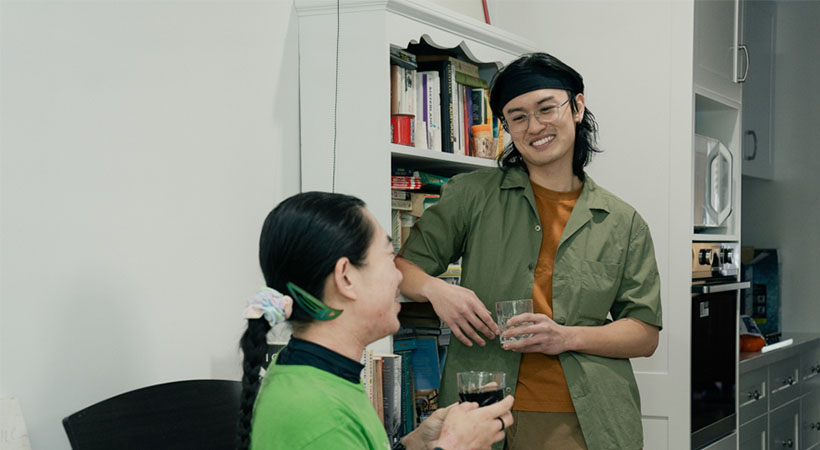
Maintaining cultural and family values away from home
My connection with my family is complicated. I haven’t come out. There’s always a mix of fear, sadness, and even anger — even though I know it’s not really anyone’s ‘fault’. I don’t have any family here, and in some ways, that gives me a sense of freedom. No one here knows me in the way my family back home does or has expectations of how I ‘should’ be.
Culturally, I still listen to Vietnamese music, read Vietnamese news, and watch Vietnamese films when they’re released here. Many of our festivals are similar to Chinese cultural celebrations, and I find my own small ways to mark them with the people I care about.
Balancing family values with my queer identity
I think Vietnamese culture is slowly becoming more accepting of queer people, especially in younger generations. I’m not religious, so that was never a significant internal conflict for me. The difficulty comes from family expectations — for men to marry, have children, and raise a family. It’s similar in other Asian cultures.
I wouldn’t say I’m ‘balancing’ it well, since I’m still hiding my sexuality from my family. But I made peace with being gay a long time ago.
“I’m happy with who I am now and with the fact that I can make my own decisions about my life.”
Advice for queer migrants arriving in Australia
Do some research on sexual health by reading Emen8’s Knowledge Hub, and other translated articles available in Vietnamese. Here, you can find a service for getting your first HIV and STI test in Australia.
The first time I went to a clinic here, I was nervous. You might be too — but it feels so much better once you know that help is easy to access and there are people ready to support you.
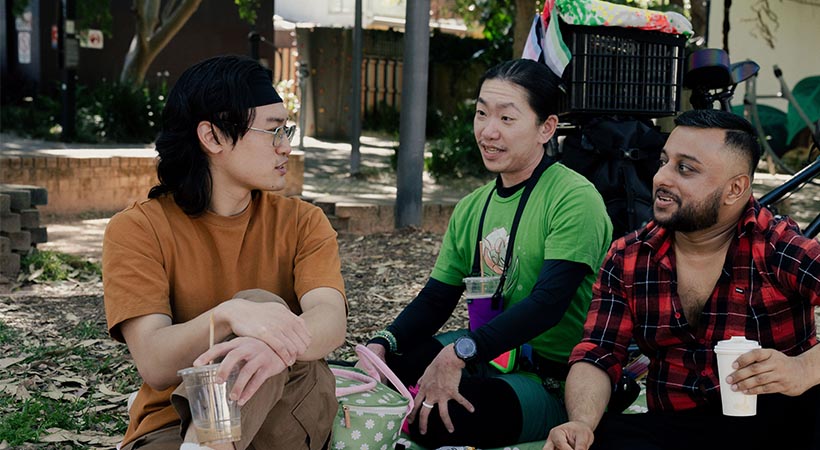
Editor’s note: This interview has been edited for length and clarity.
We thank Tom for sharing his story! You can find a service for an HIV and STI test near you using our map.
If you liked this content, you might also want to read: